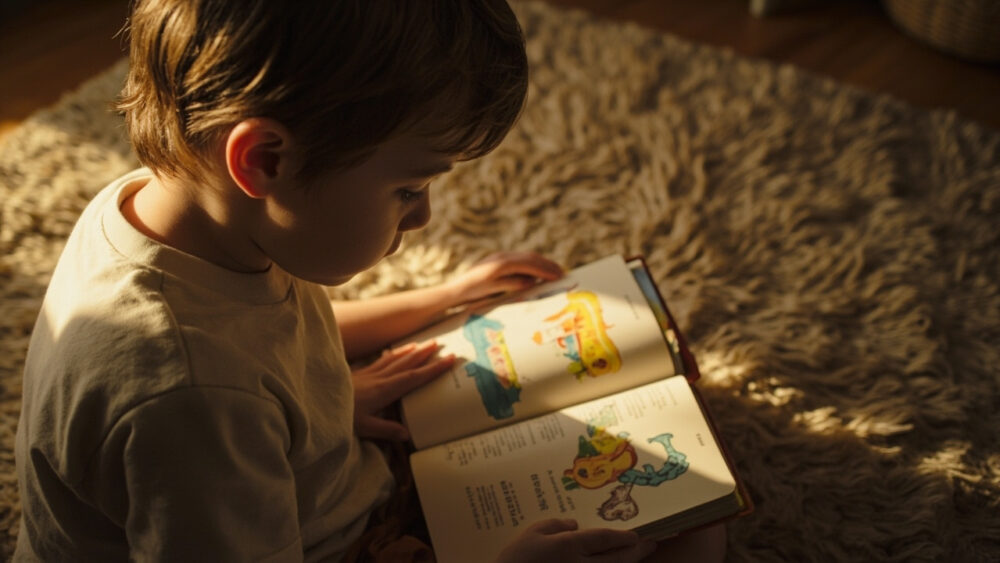
Psalm 88 teaches children that they can tell God about their sadness and fear, even when they feel he is far away, because God still hears every prayer. This lesson works well for children ages 5 to 11 and takes about 20 to 30 minutes. Because the psalm is honest about pain, teachers should be ready for children to ask questions about sadness.
Big Idea
God wants to hear everything we feel, even when it is sad or scary. We can always bring our hard feelings to him in prayer, and he is listening.
Memory Verse
Psalm 88:1
The LORD, the God of my salvation, I have cried day and night before you.
(WEB)
Have children place one hand over their heart and lift the other hand toward the ceiling as they say the verse together. Repeat it three times, each time a little softer, until the whole class can say it with their eyes closed.
The Story: Psalm 88 for Kids
Long ago, a man wrote a song to God that is not happy at all. He felt very sad and scared, and he said his troubles were like big waves crashing over him. Some of his friends had gone away from him, and he felt all alone in the dark.
Even though he was so sad, he did not stop praying. Every day he called out to God, and in the morning he brought his prayer to God again. He lifted his hands up to God and asked him to hear his cry.
He asked God some hard questions. “Why do you feel so far away from me? Why do you hide your face?” He did not pretend he was fine. He told God exactly how he felt, because he trusted that God could handle his honest words.
The song ends in a quiet, sad place. The man does not tell us that everything got better right away. But he keeps talking to God, and that is the most important thing he does in the whole song. He shows us that you can keep praying even when you do not feel better yet.
Read It Together
Psalm 88:1-2
1 The LORD, the God of my salvation, I have cried day and night before you. 2 Let my prayer enter into your presence. Turn your ear to my cry.
(WEB)
Point out that the writer calls God “the God of my salvation” and says he has cried out day and night. Ask the children what it means to cry out to someone, and remind them that God is always ready to listen to them.
Psalm 88:13
But to you, the LORD, I have cried. In the morning, my prayer comes before you.
(WEB)
Show how the writer says he cried out to the LORD and that his prayer comes before God in the morning. Explain that the morning is a good time to talk to God, but any time of day works, and God is never too busy to listen.
Psalm 88:14
The LORD, why do you reject my soul? Why do you hide your face from me?
(WEB)
Point out that the writer asks God honest questions about why he feels far away. Tell the children that it is okay to ask God hard questions, and that God wants us to be honest with him.
Talk About It
- What is one thing that makes you feel sad or scared sometimes?
- What did the writer of this psalm do when he felt sad and alone?
- How can you pray to God when you feel scared?
- Why do you think God wants us to tell him our real feelings?
- Who can you talk to, besides God, when you need someone to help you feel better?
Activity Ideas
Feelings Faces Craft
You will need paper plates, markers, glue, and yarn or craft sticks. Have each child draw a face showing a feeling they have had, such as sad, scared, or lonely, and then glue it onto a craft stick. Talk together about how God hears each of these feelings, and let children take their feelings puppets home.
Calling to God Game
Play a simple game where one child stands at one end of the room and pretends to call out to God, like “Hello, God, are you there?” The other children answer by walking slowly toward the caller to show that God is always close by. Tell the children that God hears them even before they finish speaking.
Prayer Journal Page
You will need a sheet of paper for each child, a pencil or crayons, and a folder or envelope. Ask each child to draw or write one honest feeling and one thing they want to tell God about it. Encourage them to take the page home and share it with a parent, and to pray about it together during the week.
Teacher Notes
Psalm 88 is unusual because it ends without a clear turn toward hope, and it shows that God’s people can bring their darkest feelings to him without hiding them. Adults can see in it a model for honest prayer, including when faith feels thin. It also reminds us that the psalmist keeps praying even when he cannot see an answer.
Avoid telling children that prayer always makes sad feelings disappear right away. The psalm itself does not promise a quick fix, so be gentle about how children feel, and say that God is near even when we do not feel his presence. Let children know that sadness is real and that they can talk to God about it.
A Prayer to Close
Lord, thank you that we can tell you everything we feel, even the sad and scary things. Thank you for listening to every prayer we pray, in the morning and at night. Help us remember that you are always near us, and help us trust you with our hard feelings. Amen.