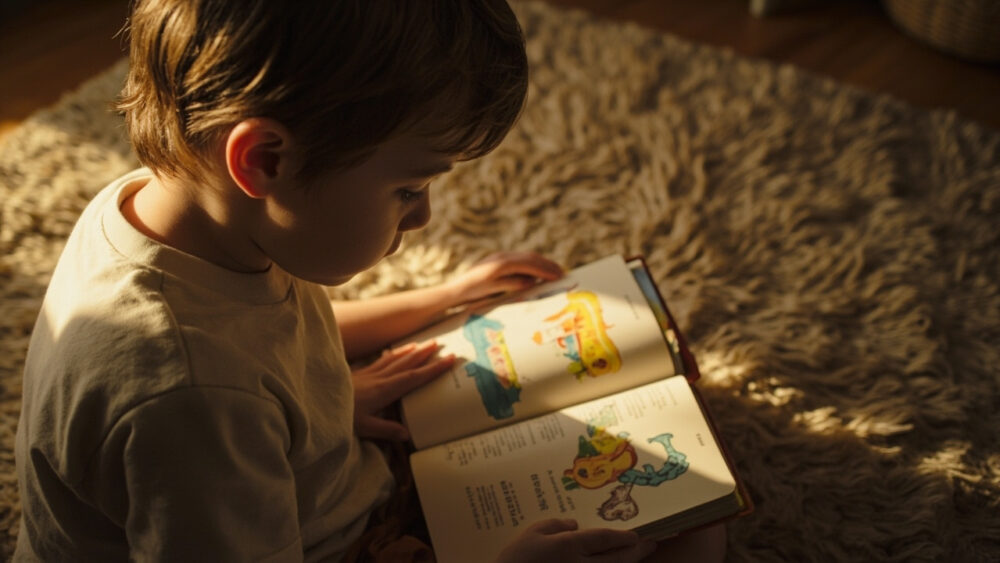
This lesson teaches children that God keeps his promises, even when people do not. Ezekiel 17 is a story about two great trees and a broken agreement, and it works well for children from about 5 to 11. Plan for 20 to 30 minutes, including the story, the activity and the prayer.
Big Idea
God always keeps his promises, and he is able to make even small and weak things grow strong.
Memory Verse
Ezekiel 17:24
All the trees of the field will know that I, the LORD, have brought down the high tree, have exalted the low tree, have dried up the green tree, and have made the dry tree flourish. “‘I, the LORD, have spoken and have done it.’”
(WEB)
Teach children to hold both arms out wide like branches, then slowly lower them, then raise them high again. Each time they move, they say the words “I, the LORD, have spoken, and I will do it,” so the motion and the words stay together.
The Story: Ezekiel 17 for Kids
God gave the prophet Ezekiel a riddle to share with the people of Israel. In the riddle, a great eagle flew to Lebanon and broke off the top of a tall cedar tree. The eagle carried that branch to a city full of merchants and planted it there. Children, you can picture that new little tree growing in a faraway land.
Then the eagle took a seed from the land and planted it in good, wet soil beside plenty of water. The little plant grew into a low, spreading vine. Its roots reached toward the first eagle, as if it wanted to be taken care of. But then a second, larger eagle came along, and the vine turned its roots and branches toward that eagle instead.
God explained that the vine was a picture of King Zedekiah of Judah. Zedekiah had made a promise to the king of Babylon, and he broke it by sending messengers to Egypt for help. God said that Zedekiah could not escape his punishment for breaking a promise. Children, God never breaks his promises, so this shows how seriously he takes faithfulness.
After the sad part, God spoke a hopeful word. He said he would take a tender twig from the top of the cedar and plant it on a high mountain in Israel. That little branch would grow into a tall, beautiful tree where birds could rest in its shade. God said, “All the trees of the field will know that I, the LORD, have brought down the high tree, have exalted the low tree.”
So the lesson ends with God doing something surprising. He takes what seems small and weak, and he makes it strong and full of life. God keeps his word, and he is able to bring good things out of hard times.
Read It Together
Ezekiel 17:9-10
9 “Say, ‘Thus says the Lord the LORD: “Will it prosper? Won’t he pull up its roots, and cut off its fruit, that it may wither; that all its fresh springing leaves may wither? It can’t be raised from its roots by a strong arm or many people. 10 Yes, behold, being planted, will it prosper? Won’t it utterly wither when the east wind touches it? It will wither in the beds where it grew.”’”
(WEB)
Point out that God asks a question here: will the broken vine prosper? Let children answer in their own words. Explain that people who break their promises cannot expect God to bless them the same way.
Ezekiel 17:22-23
22 “Thus says the Lord the LORD: ‘I will also take some of the lofty top of the cedar, and will plant it. I will crop off from the topmost of its young twigs a tender one, and I will plant it on a high and lofty mountain. 23 I will plant it in the mountain of the height of Israel; and it will produce boughs, and bear fruit, and be a good cedar. Birds of every kind will dwell in the shade of its branches.
(WEB)
Show children how God takes a tender twig and makes it into a tree that shelters birds. Ask them to notice that God is the one who plants the tree, which means the growing is his work and not ours.
Ezekiel 17:15-16
15 But he rebelled against him in sending his ambassadors into Egypt, that they might give him horses and many people. Will he prosper? Will he who does such things escape? Will he break the covenant, and still escape? 16 “‘As I live,’ says the Lord the LORD, ‘surely in the place where the king dwells who made him king, whose oath he despised, and whose covenant he broke, even with him in the middle of Babylon he will die.
(WEB)
Help children see that the king broke his oath and his covenant. Explain that covenant is a serious word for a promise between two parties, and that God was keeping track of who kept their word.
Talk About It
- What is something you have promised someone, and how did you feel while you kept that promise?
- Why do you think God wanted the people of Israel to remember his promises to them?
- How did the little twig in the story become something very different from what it was at first?
- What is one small thing in your life that God might help grow over time?
- When someone breaks a promise to you, how can you still trust that God will keep his promise to you?
Activity Ideas
Draw a Growing Tree
You need paper, crayons or markers, and a pencil. Ask each child to draw a tall cedar with a small green twig on top, then draw a bird perching in the branches. While they draw, talk about how God makes small things grow into big, strong trees. Children can write their name at the base of the trunk as a reminder that God is faithful to each of them.
Eagle and Vine Movement Game
You need an open room or yard and a few pieces of string or yarn. Let one child be the eagle who flies around with arms spread wide, while the others crouch low like little vines. When you call out “eagle,” the vines slowly stretch their arms up toward the sky, practicing the idea of growing toward God. Switch roles so everyone has a turn as the eagle.
Take-Home Seed Jar
You need a clear cup, a few spoonfuls of soil, a bean seed or grass seed, and a little water. Help each child plant the seed in the cup and set it on a sunny windowsill. Each day, invite them to water it and say a short thank-you prayer to God for growing things. Explain that the seed reminds us how God takes something small and makes it grow.
Teacher Notes
For adults, Ezekiel 17 is a parable that explains why Judah fell to Babylon. King Zedekiah had sworn loyalty to Nebuchadnezzar, but he broke that oath by turning to Egypt for help. God declares that the broken covenant will bring judgment, yet he also promises to plant a new shoot that will grow into a shelter for all nations. The chapter shows both God’s justice and his faithfulness to restore.
When teaching children, avoid overstating the political details or treating the story as a simple code for modern events. Keep the focus on God keeping his promises and making small things grow, rather than trying to explain every symbol. Children need the picture of God’s faithfulness more than the history lesson.
A Prayer to Close
Dear God, thank you for keeping every promise you have made to us. Help us remember that you can make small things grow strong, even when we feel weak or unsure. Teach us to be faithful like you, keeping our word to the people we love. We trust you to plant good things in our lives. Amen.