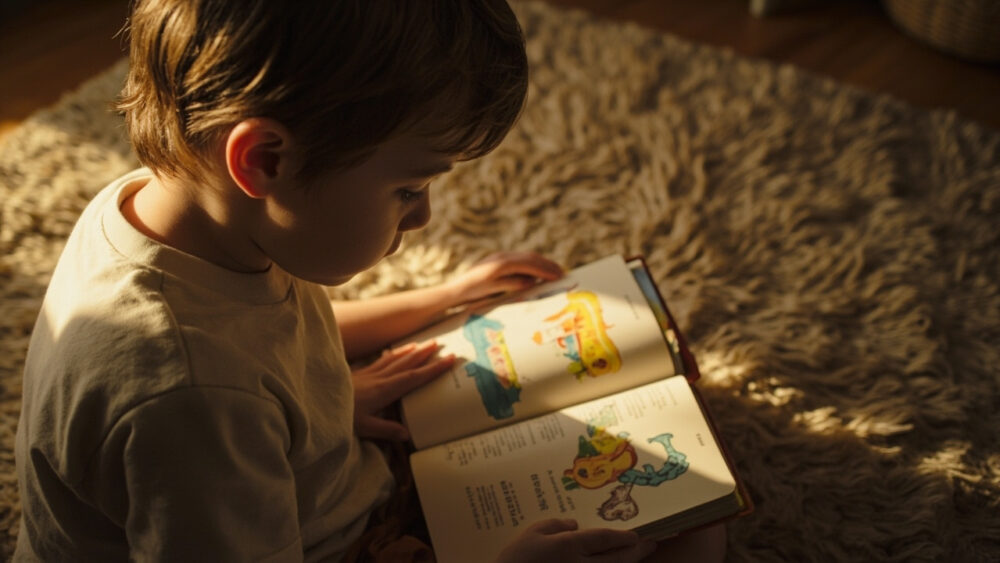
This lesson teaches children that God’s people remember what He does and pass those stories on to their children. It suits children ages 5 to 11 and takes about 20 to 30 minutes, with a short story, a memory verse, a few Bible readings, and an activity.
Big Idea
Good stories about God are worth remembering, and we should tell them to the children we love so they can know Him too.
Memory Verse
Joel 1:3
Tell your children about it, and have your children tell their children, and their children, another generation.
(WEB)
Ask children to hold up three fingers and then point to the ceiling, then to the floor, then to a friend. As you say the verse together, pass the story along by pointing from one person to the next, like a message being handed down.
The Story: Joel 1 for Kids
A long time ago, God spoke to a man named Joel, the son of Pethuel. God gave Joel a message for the people of the land of Judah. Joel told them to listen carefully, because something very big had happened to their country. Nobody had ever seen anything like it before.
Swarms of locusts came into the fields. These were not small bugs. They came in waves, one after another. The first group ate the crops, and then the next group came and ate what was left. Then another group came and ate everything else. The vines, the fig trees, and the fields were all destroyed.
The people felt great sadness. The farmers cried because their wheat and barley were gone. The grape growers wailed because their vines were dry and broken. Even the priests in God’s house were sad, because there was no grain or wine to offer to God. Joel said to the priests, “Put on sackcloth and mourn,” which meant wearing rough clothes to show that they were sorry and needed God’s help.
Joel told the people to gather together and pray. He said they should call a solemn assembly, which means a serious meeting, and cry out to the LORD. Joel reminded them that the day of the LORD was coming and that it would be a day of great trouble. The people needed to turn to God with their whole hearts.
Even the animals suffered, because there was no grass to eat and no water to drink. Joel wrote that the animals panted and cried out to God. The story ends with Joel praying to the LORD, because the fire and the drought had burned the pastures and dried up the streams.
Read It Together
Joel 1:2
Hear this, you elders, And listen, all you inhabitants of the land. Has this ever happened in your days, or in the days of your fathers?
(WEB)
Point out that God asked the people to listen and to remember. Ask the children whether they have heard stories about God from their parents or grandparents, and why those stories matter.
Joel 1:14
Sanctify a fast. Call a solemn assembly. Gather the elders, and all the inhabitants of the land, to the house of the LORD, your God, and cry to the LORD.
(WEB)
Show the children that God’s people were told to come together and cry out to Him. Explain that praying with others is one way we can lean on God when life feels hard.
Joel 1:19
The LORD, I cry to you, For the fire has devoured the pastures of the wilderness, and the flame has burned all the trees of the field.
(WEB)
Point out that Joel brought his worries straight to the LORD. Let the children know they can also talk to God about their own fears and sadness.
Talk About It
- What is one story about God that you remember really well?
- Why do you think God wanted the people to tell their children about what happened?
- What did the farmers and priests do when they were sad about the locusts?
- How do you think the animals felt when there was no water or grass?
- When you feel scared or sad, what could you say to God?
Activity Ideas
Story Picture Strip
You will need paper folded into four or five squares, crayons or markers, and a pencil. Have each child draw one scene from the story, such as the locusts coming, the farmer crying, the priests praying, and the animals thirsty. Let them talk through each picture as they finish it, and then tape the squares in order to make a story strip to take home.
Locust Hop Game
You will need an open space and a few soft objects, like pillows or folded towels, to mark the fields. Tell the children they are locusts that hop from one field to the next, and when you say “Pray!” they stop, kneel, and fold their hands. Keep the game short and fun, and end by praying together as a group.
Tell It Again Card
You will need an index card, a pencil, and a small envelope for each child. Ask each child to write or draw one thing they learned from the story, then place it in the envelope. Encourage them to take the card home and tell someone in their family what they learned about God today.
Teacher Notes
For adults, Joel 1 shows that God’s people can bring their losses and grief directly to Him, even when the disaster seems to come from His hand. The chapter also reminds us that remembering God’s work in the past is part of faithful living, and that handing this faith down to the next generation is a serious responsibility.
Avoid overstating to children that every hard thing is a punishment from God or that the locusts were a direct message about their behavior. The text speaks of a real disaster and a call to prayer, so focus on turning to God in trouble rather than on guessing why it happened.
A Prayer to Close
Lord, thank You for the stories we can tell about You. Help us remember what You have done and share it with our children. When we feel sad or scared, help us turn to You and talk to You like Joel did. Thank You that You hear us. Amen.