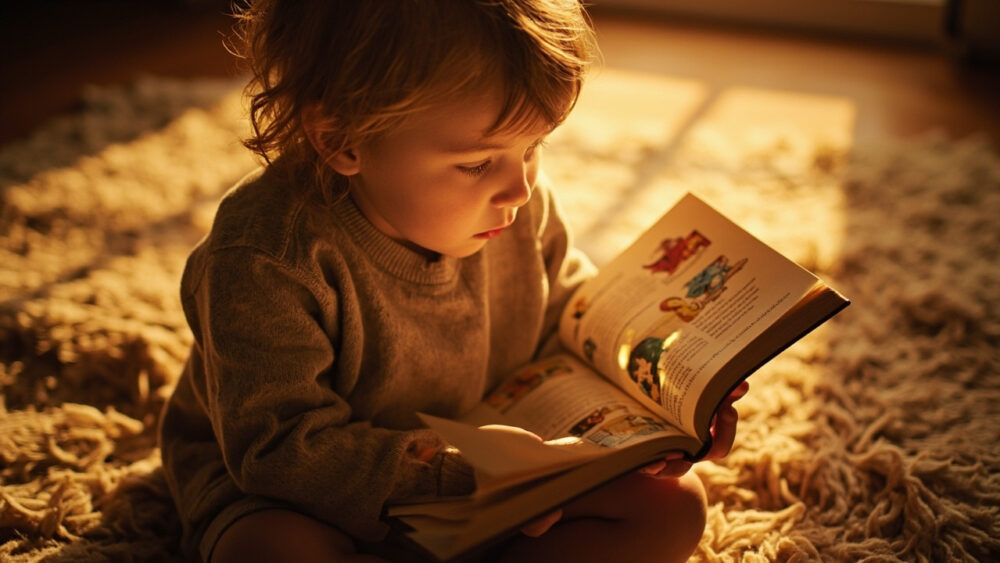
This lesson teaches children that God knows every family and keeps His promises, even when the names are hard to say. It is made for children ages 5 to 11 and takes about 20 to 30 minutes, including a short story, a few Bible readings, and an activity.
Big Idea
God remembers every family in the world, and He keeps His promises to the people He loves. Even a long list of names matters to Him, because each name belongs to someone He made.
Memory Verse
Genesis 36:1
Now this is the history of the generations of Esau (that is, Edom).
(WEB)
Hold both hands out flat like a book, then open them slowly like pages turning. Say the words “Now this is the history” as you turn the pages, so children link the verse to the idea of God writing down every family story.
The Story: Genesis 36 for Kids
Esau was the brother of Jacob, and Esau’s family grew big. Esau had wives named Adah, Oholibamah, and Basemath. He also had sons, like Eliphaz and Reuel, and many children after them. Some of Esau’s children grew up to lead groups of people, and they were called chiefs.
One day Esau and Jacob had so many animals and so many things that the land could not hold them all. Their herds were too big to share the same grass. So Esau said, in his own simple way, “We need more room, so I will go and live somewhere else.” He packed up his family, his animals, and everything he owned, and he moved to the hill country of Seir.
Esau’s family became a whole nation, and the people of that nation were called Edomites. Esau is also called Edom in this chapter. The chapter tells us their family tree, name by name, so we know exactly who came from whom.
Some of the men in this list ruled as kings in the land of Edom. They ruled long before there was any king over the people of Israel. The Bible writes down their names so we can see that God was watching over all the nations, not only one family.
This long list might seem boring at first. But every name is a real person whom God knew and cared about. God kept track of Esau’s family, just as He keeps track of yours.
Read It Together
Genesis 36:6-7
6 Esau took his wives, his sons, his daughters, and all the members of his household, with his livestock, all his animals, and all his possessions, which he had gathered in the land of Canaan, and went into a land away from his brother Jacob. 7 For their substance was too great for them to dwell together, and the land of their travels couldn’t bear them because of their livestock.
(WEB)
Point out that Esau moved away so that there would be enough land for everyone. Ask children why peace sometimes means one person choosing to step back, and remind them that Esau’s choice made room for his family to live well.
Genesis 36:8
Esau lived in the hill country of Seir. Esau is Edom.
(WEB)
Show children where Seir is on a simple map or point to a hill outside the window. Explain that this verse tells us where Esau settled, and that God knew every place His people lived, including the hills far from home.
Genesis 36:31
These are the kings who reigned in the land of Edom, before any king reigned over the children of Israel.
(WEB)
Explain that this verse says kings ruled in Edom before Israel had a king. Tell children that God is in charge of every kingdom and every time in history, and that nothing in the world happens outside His care.
Talk About It
- What is one thing you learned about Esau’s family that surprised you?
- Why do you think God wrote down so many names in this chapter?
- How did Esau make room for his family when there was not enough land?
- What are some ways you can show kindness when someone needs more space or more help?
- How does knowing that God remembers your name make you feel?
Activity Ideas
Family Tree Drawing
You will need paper, crayons or markers, and a pencil. Have each child draw a simple tree with branches, then write or draw the names of people in their own family on the branches. Talk about how God knows each person on the tree, just as the Bible lists Esau’s sons and grandsons by name.
Walk to the Hill Country
Clear a space in the room or outside. Place a few pillows or chairs around as “hills” and have children walk carefully between them, pretending to carry bags and animals like Esau’s family. When you call “Stop,” they freeze and say the name of one person from the story. Practice moving together while sharing the space well.
Name Keeper Card
You will need an index card, markers, and a small ribbon or string. Let each child write their own name in large letters and decorate the card. Punch a hole in the corner and tie on the string so they can take it home. Encourage them to keep it somewhere they will see it, as a reminder that God knows their name.
Teacher Notes
For adults, Genesis 36 shows that God cares about the whole human story, including families and nations that are not part of the main line of Israel’s history. The list reminds us that God’s faithfulness is not limited to one people, and that every family matters to Him. It also reveals God’s patience with the long, slow unfolding of history.
When teaching children, avoid overstating the idea that the list of names is a lesson about hidden meanings or complicated symbols. Keep the focus simple: God knows people and remembers them. Do not turn Esau into a villain or a hero beyond what the chapter says, and avoid making the lesson about kings or chiefs in a way that distracts from God’s care.
A Prayer to Close
Dear God, thank You that You know every family and every name. Thank You that You remember us and keep Your promises. Help us make room for others, just as Esau made room for his family. Help us trust You every day. Amen.